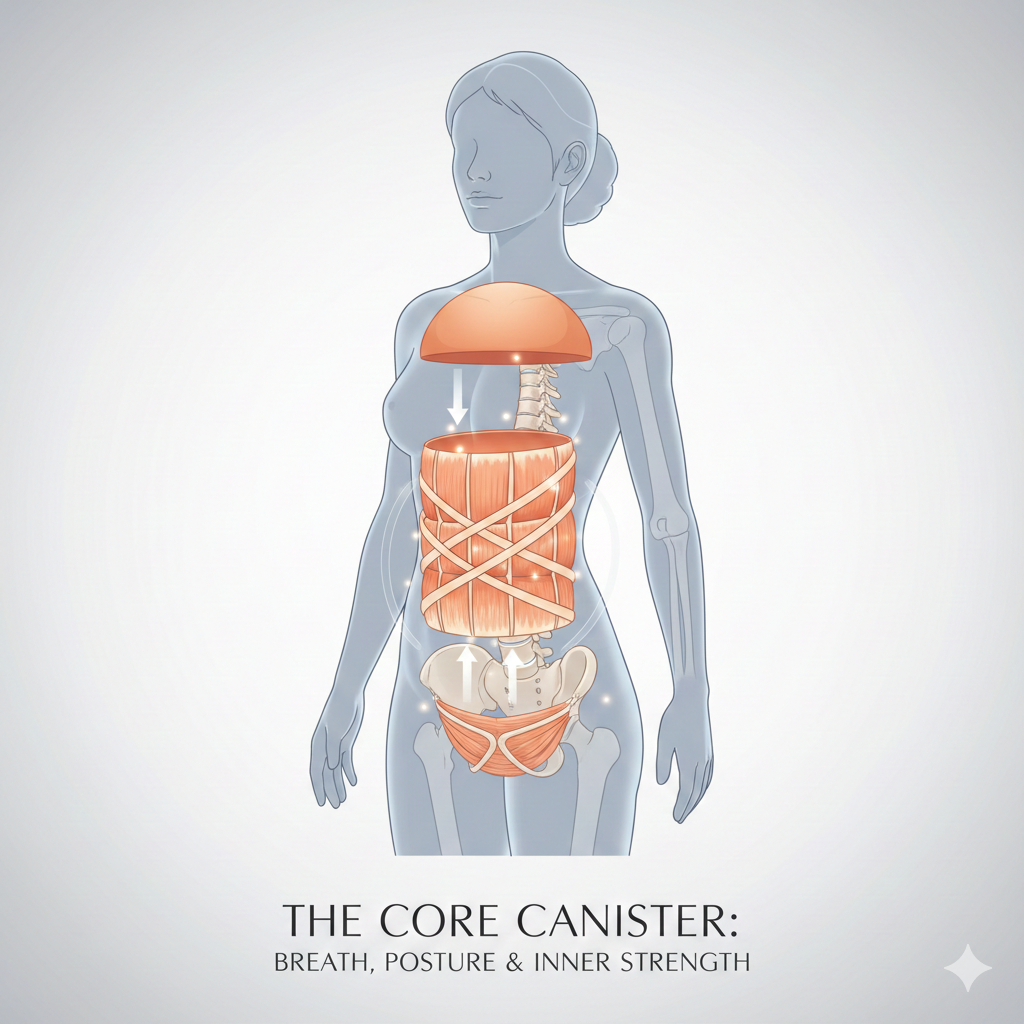
Movement is a constant conversation between your muscles and the ground beneath you. While we often think of pelvic floor health as something that happens “inside,” it is deeply affected by how we carry ourselves on the outside. Your posture isn’t just about looking confident; it is the framework that allows your pelvic floor to function.
The Alignment of the “Core Canister”
Think back to the “Core Canister” image. Your diaphragm sits at the top, and your pelvic floor sits at the bottom. For this system to manage pressure effectively, the top and bottom need to stay stacked.
When we “tuck” our tailbone under or “slump” our shoulders forward, we tilt the canister. This tilt puts uneven pressure on the pelvic floor. Over time, this makes it harder for those muscles to react quickly when you jump, run, or even breathe deeply.
A study in the Journal of Physical Therapy Science examined how pelvic tilt affects muscle activity. The researchers discovered something important: even small changes in pelvic position, whether you’re tilting forward or backward, directly impact how your deep core muscles engage. This includes muscles like the transversus abdominis.
What does this mean for you? Your pelvic posture isn’t just cosmetic. It actually determines whether your internal support system can “switch on” properly throughout the day.
The “Tucking” Habit
Many of us were told to “tuck our tummies” or “squeeze our glutes” to look taller or thinner. However, constant “tucking” of the pelvis can actually lead to a tight, overworked pelvic floor.
When the tailbone is always pulled under, the muscles stay in a shortened state. This prevents the natural “rhythm of the breath” we explored in our [Anatomy of Support] guide. Healthy pelvic floor posture allows for a neutral spine where the muscles have room to move.
Sitting in the Modern World
We spend a large portion of our lives sitting at desks or in cars. This “static” position can cause our hip flexors to tighten, which pulls on the pelvis. To support your foundation while sitting, try to find your “sit-bones”, those two firm bones at the base of your seat. When you sit directly on them, rather than rolling back onto your tailbone, you give your pelvic floor the best environment to support your organs.
Why Your Feet Matter
It might seem strange, but your pelvic floor starts at your feet. How you distribute your weight when standing changes how your pelvis tilts. If you always lean into one hip or lock your knees, your pelvic floor has to work harder to keep you stable.
As the experts at Mayo Clinic point out, maintaining good posture isn’t just about standing straight; it is about how you walk, sit, and even lie down. They recommend keeping your weight balanced on both feet and avoiding “locking” your knees, which helps prevent unnecessary strain on your ligaments and your pelvic floor.
Small Shifts for Daily Life
Improving your posture doesn’t mean standing like a soldier. It means finding more “neutral” moments throughout your day.
- Soften your knees: When standing in line, avoid locking your joints.
- Release the “grip”: Notice if you are clenching your stomach while driving.
- The Sit-Bone Check: Adjust your chair so your hips are slightly higher than your knees.
These small shifts in everyday movement reduce the “load” on your pelvic floor. By aligning your body, you allow your foundation to do its job without extra effort.